 TechSecret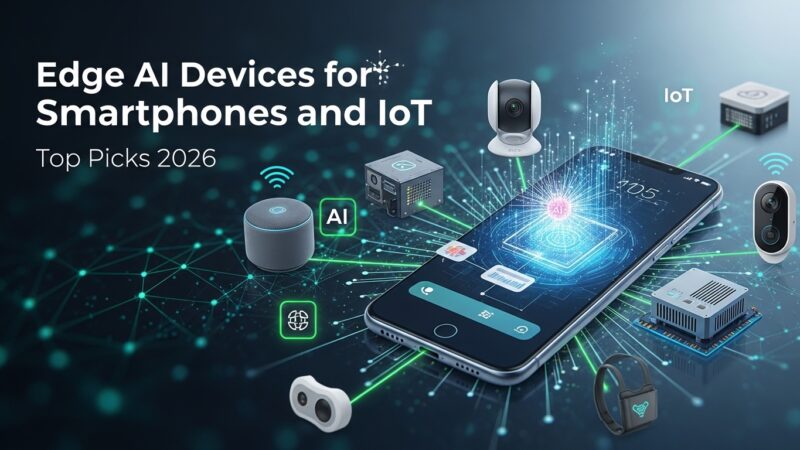
🚀 Introduction: Why Edge AI Devices Matter in 2026
In 2026, AI is shifting away from cloud dependency toward edge AI devices—hardware that processes data locally on smartphones, IoT systems, and embedded devices.
If you’re searching for edge ai devices for smartphones and iot top picks 2026, this guide covers:
- The best edge AI gadgets available today
- How on-device AI processing works
- Privacy and performance benefits
- Real-world applications
👉 Bottom line: Faster, safer, and smarter AI—right on your device.
🤖 What Are Edge AI Devices?
Edge AI devices are hardware systems that run AI models locally instead of sending data to the cloud.
Key Features:
- On-device AI processing
- Low latency (instant response)
- Enhanced privacy
- Offline functionality
These devices are the backbone of privacy-focused AI devices in 2026.
🔥 Top Edge AI Devices for Smartphones & IoT (2026)
📱 1. Google Pixel 8 Pro
Why It Stands Out:
- Powered by Tensor AI chip
- Advanced on-device AI features
- Real-time photo and voice processing
Best For:
- Everyday users
- AI-powered mobile experience
📱 2. Samsung Galaxy S24 Ultra
Features:
- Galaxy AI tools
- On-device translation
- Smart camera AI
Best For:
- Productivity
- Mobile AI workflows
🧠 3. NVIDIA Jetson Nano
Why It’s Powerful:
- AI computing for robotics
- Supports deep learning models
- Affordable developer board
Best For:
- Developers
- Robotics projects
- IoT systems
🧩 4. Raspberry Pi 5 + AI Modules
Features:
- Flexible AI integrations
- Works with AI accelerators
- Huge community support
Best For:
- DIY edge AI projects
- Smart home systems
📷 5. Luxonis OAK-D
Highlights:
- Real-time object detection
- Depth sensing
- Built-in AI processing
Best For:
- Computer vision
- Automation systems
🧠 6. Google Coral USB Accelerator
Key Features:
- Edge TPU for fast inference
- Low power consumption
- Plug-and-play AI acceleration
Best For:
- IoT developers
- Edge AI applications
🏠 7. Smart Home AI Hubs (Edge-Based)
Examples:
- Local AI hubs (Home Assistant setups)
Benefits:
- No cloud dependency
- Full privacy control
- Automation workflows
⚙️ How On-Device AI Processing Works
Simple Flow:
- Data collected (camera, mic, sensors)
- AI model runs locally
- Instant decision/output
- No cloud interaction
👉 Result:
- Faster performance
- Better privacy
🔒 Why Edge AI Is More Privacy-Focused
Advantages:
- Data stays on device
- No external servers
- Reduced data leaks
👉 This is why privacy-focused AI devices are growing rapidly.
🏢 Real-World Applications
📱 Smartphones
- AI photo editing
- Voice assistants
- Translation
🏠 Smart Homes
- Automation
- Security monitoring
🚗 Automotive
- Driver assistance
- Object detection
🏭 Industry
- Predictive maintenance
- Robotics
⚠️ Challenges of Edge AI Devices
- Limited compute power
- Model size constraints
- Hardware dependency
👉 Hybrid AI (edge + cloud) is still common.
📈 Future Trends (2026)
- More powerful edge chips
- Fully offline AI systems
- Growth in IoT AI devices
- Better energy efficiency
💡 Final Thoughts
The best edge AI devices for smartphones and IoT in 2026 are making AI:
- Faster ⚡
- Safer 🔒
- More accessible 🌍
👉 Whether you’re a user or developer: Edge AI is the future of intelligent devices.
📊 SEO Keywords Used
Primary Keyword:
- edge ai devices for smartphones and iot top picks 2026
Secondary/LSI:
- edge ai gadgets
- on-device ai processing
- privacy focused ai devices
Great content! Keep up the good work!